
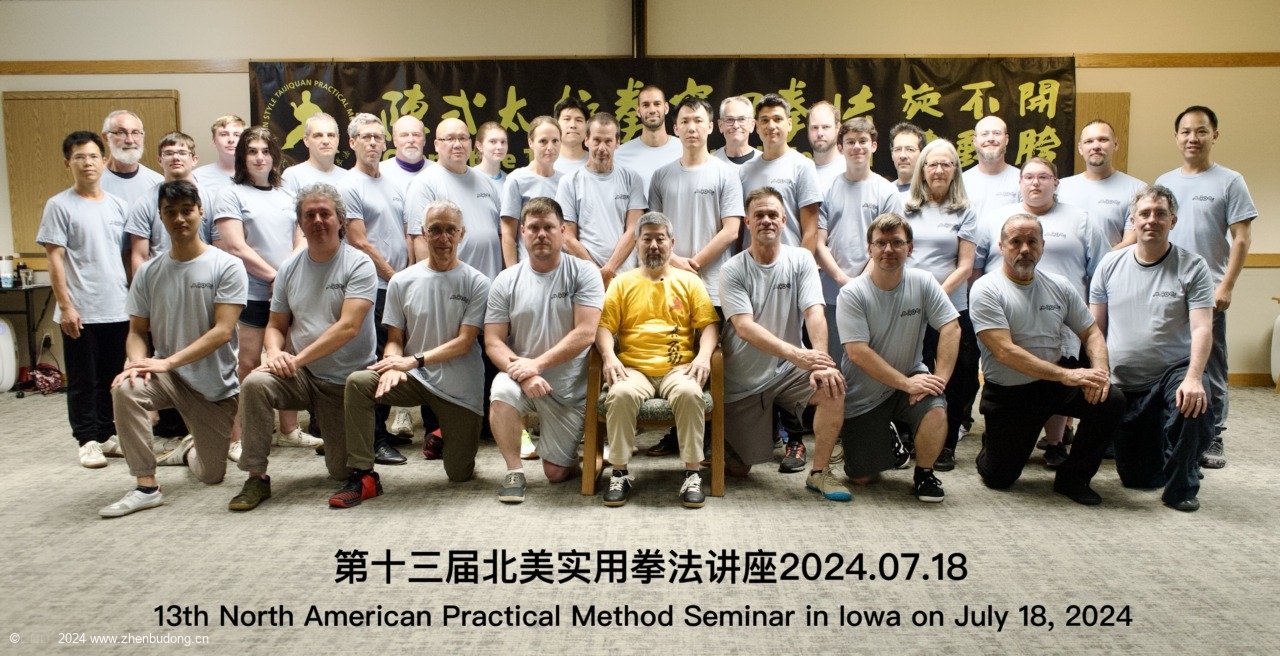
13th NA Practical Method Seminar in Iowa 20240718-Group
To start with the context: I’m in my 10th month of training and recently learned the choreography of yilu. In other words, 100% of what I do in taiji is wrong so the insights that I got will not be news to anyone reading this.
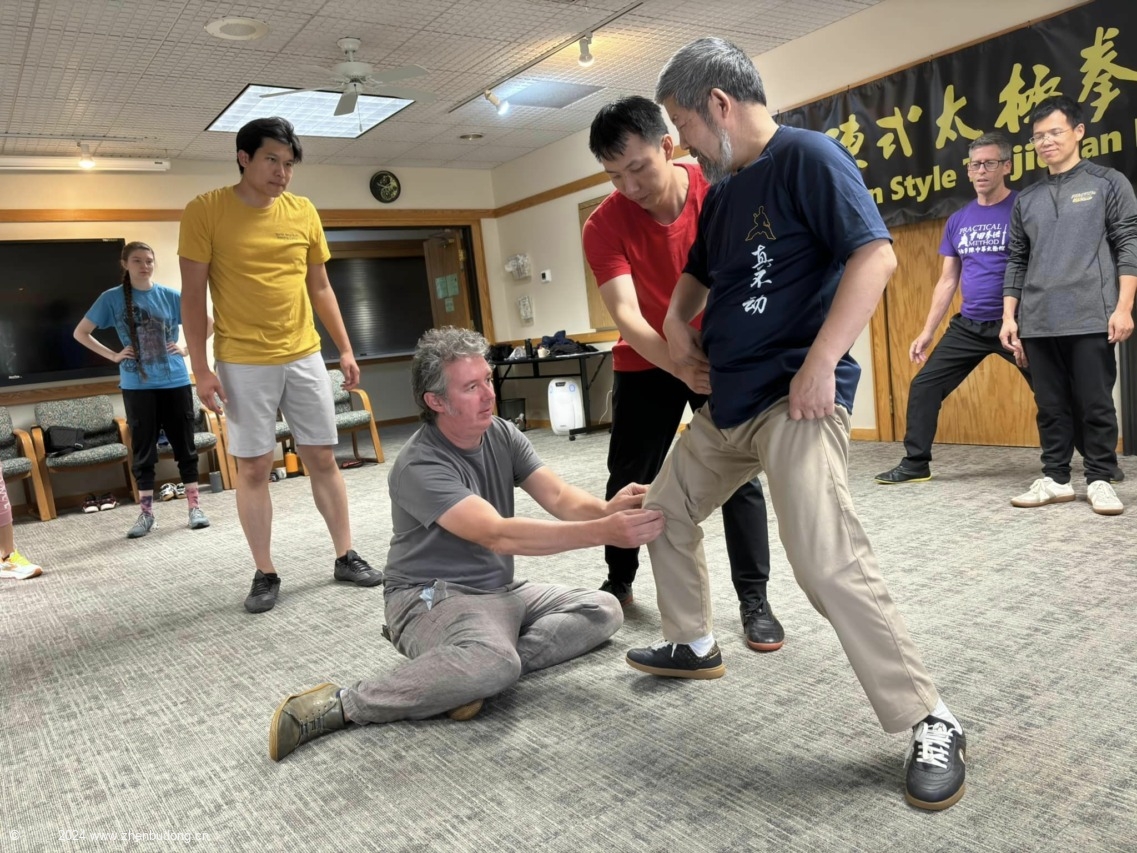
13th NA Practical Method Seminar in Iowa 20240718-2 Knee Kua
I had been to Master Chen’s Toronto workshop earlier this year and wanted to go to the Iowa camp because prior practice in a different martial art taught me two things. First, it’s essential to experience the art at the highest level of skill, as often as possible. It gives life to the words of the art principles and “it has to be felt”. Master Chen embodies those principles and I’m grateful to have had the opportunity to feel them.
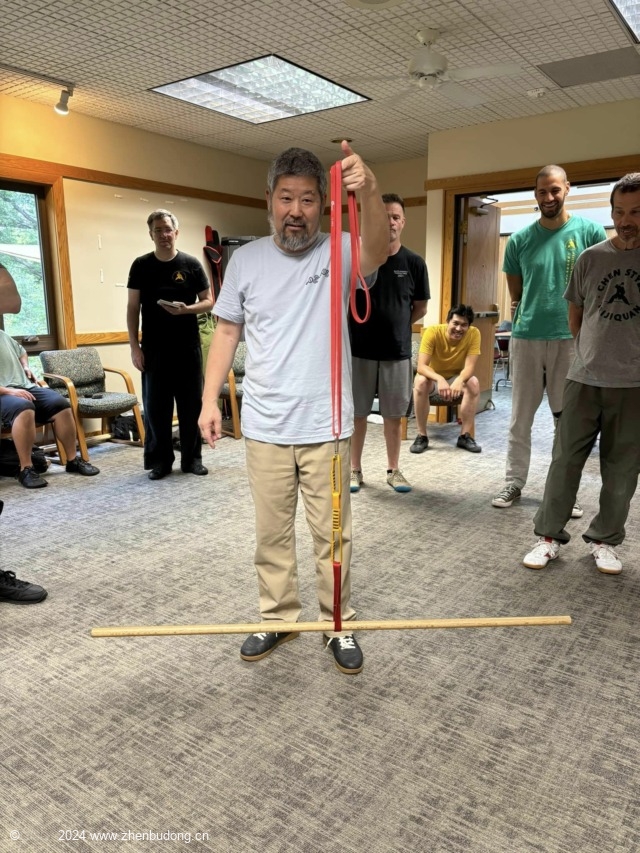
13th NA Practical Method Seminar in Iowa 20240718-6 balancing a stick
The second reason was immersion. Living a few days with only taiji in mind and both formal and informal practice allows the mind to pick up knowledge that may not register yet at a conscious level.
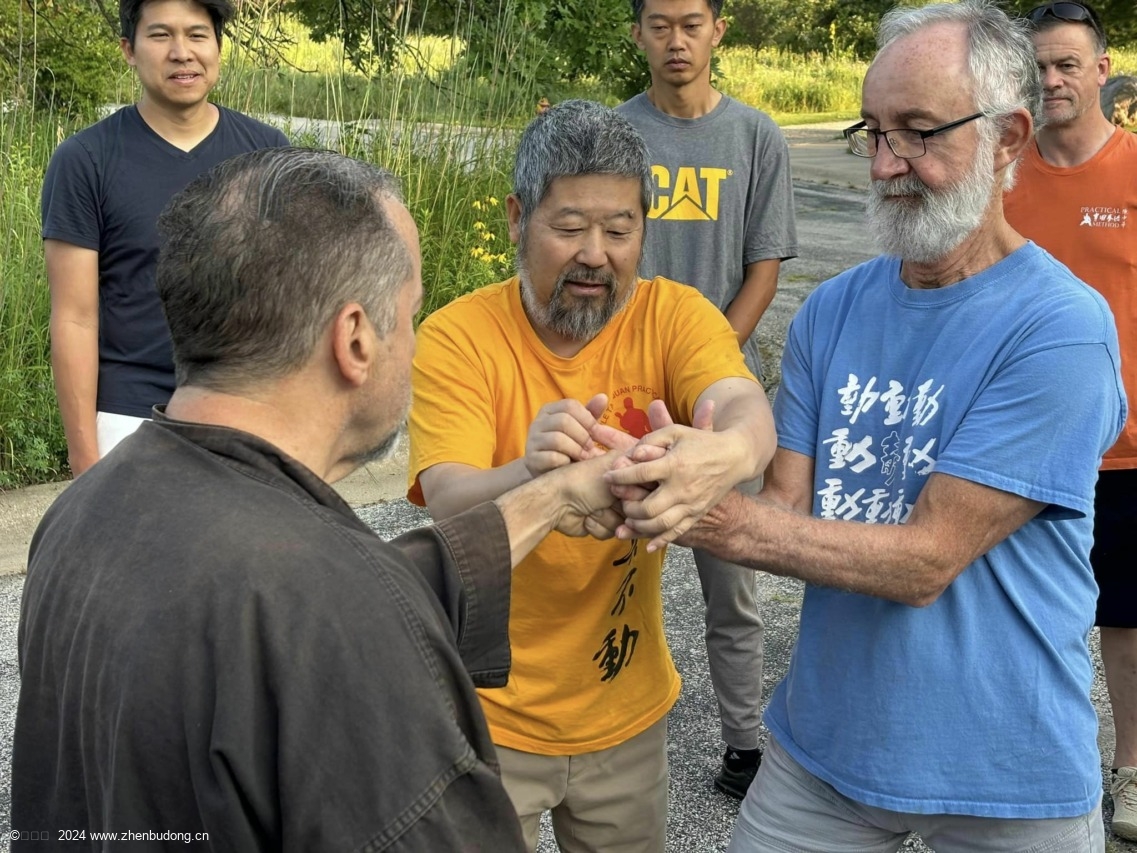
13th NA Practical Method Seminar in Iowa 20240720-19 Early Morning
Having attended, now I can say there should be a third reason: community. More about this later.
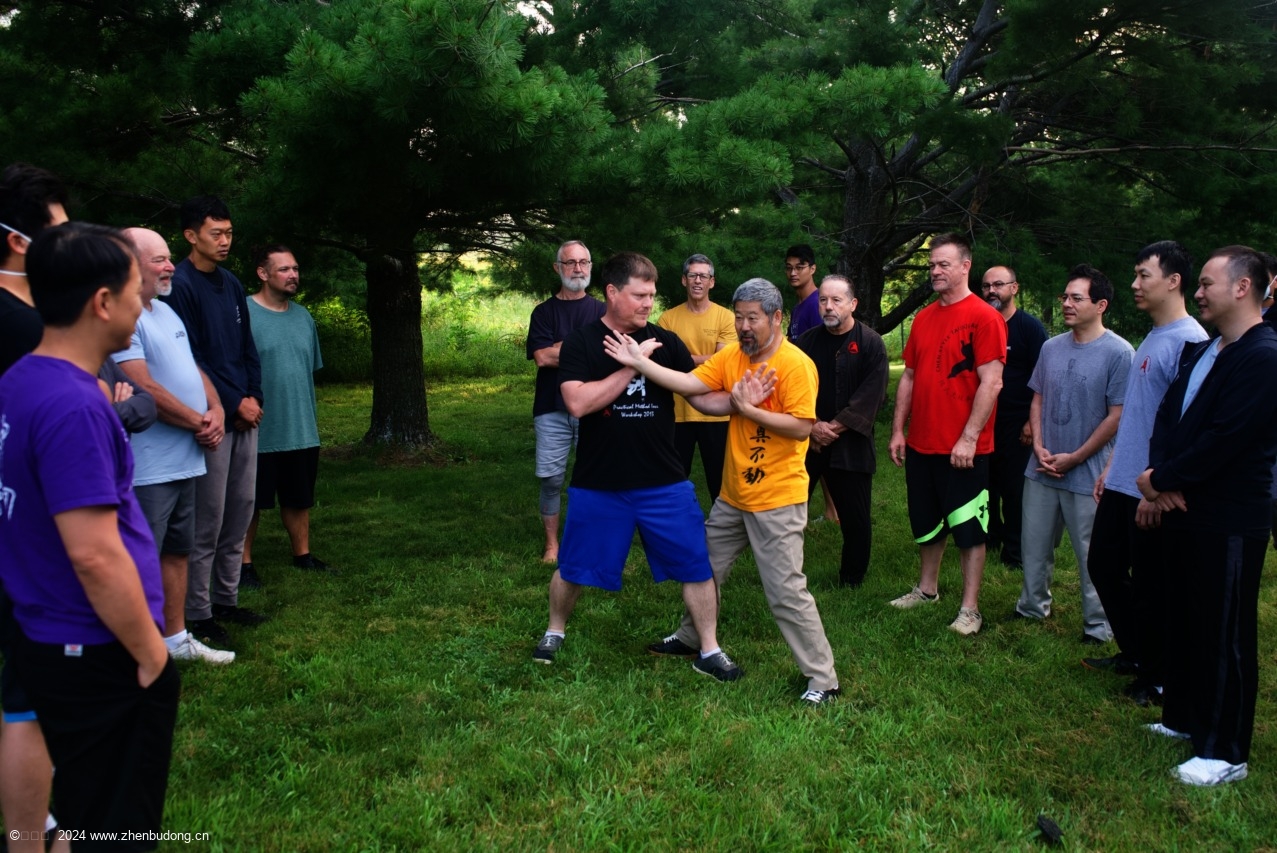
组织者之一爱荷华大学生物系教授苏昱文。
13th NA Practical Method Seminar in Iowa 20240720-晨练 – Levi Sowers
The first surprise was on arrival at the airport, when John Upshaw was waiting to give us a lift. I did not know nor expect this. Throughout the day, John made many back-and-forth trips to the airport to bring attendees as their flights came and this extended past midnight. Hats off, sir.
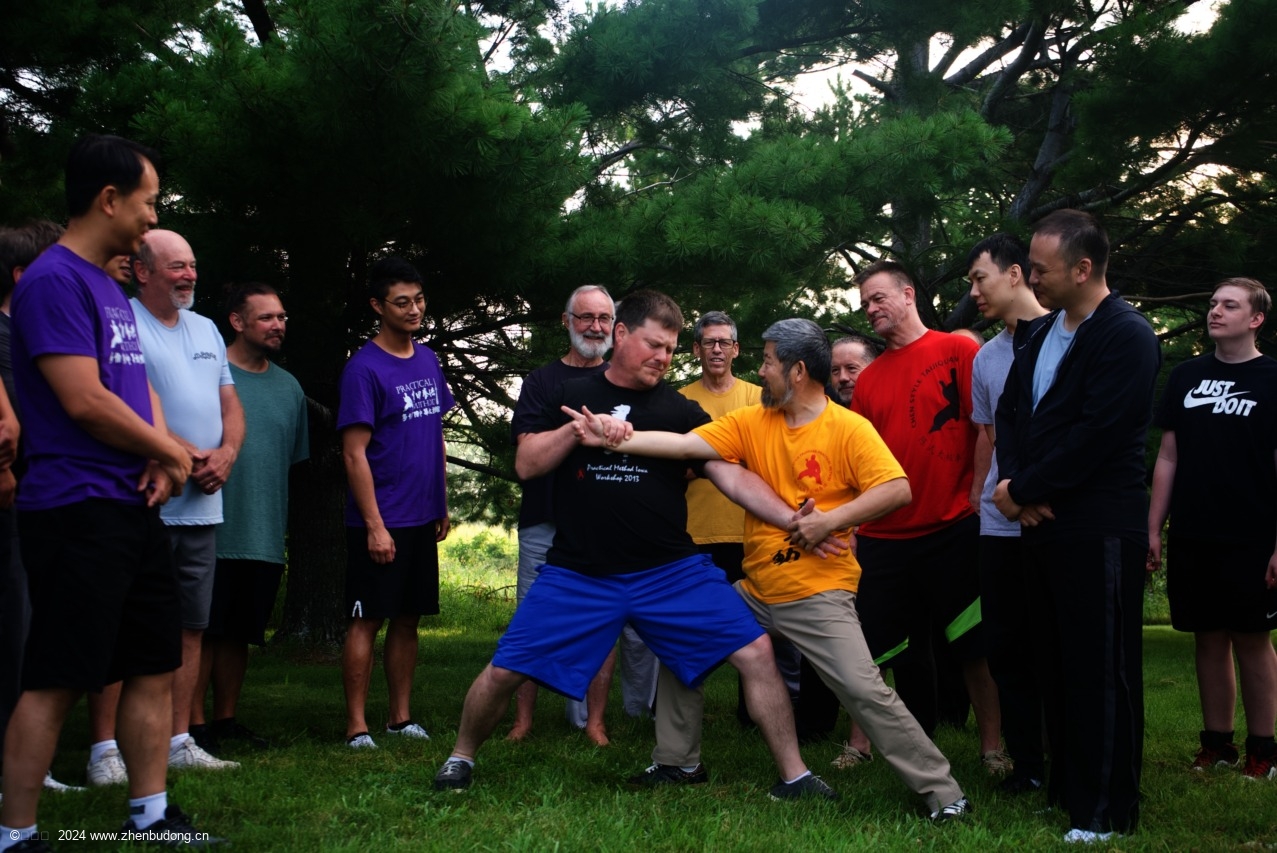
13th NA Practical Method Seminar in Iowa 20240720-晨练 – 16 Levi Sowers
Days typically started at 6:30am (blessed be the early risers who made coffee) with disciple-led foundations and yilu outside (we were lucky with the weather). Apart from specific corrections, the main lesson was that the practicing the foundations is not a phase to graduate from, but rather a part of the practice for as long as we do taiji.
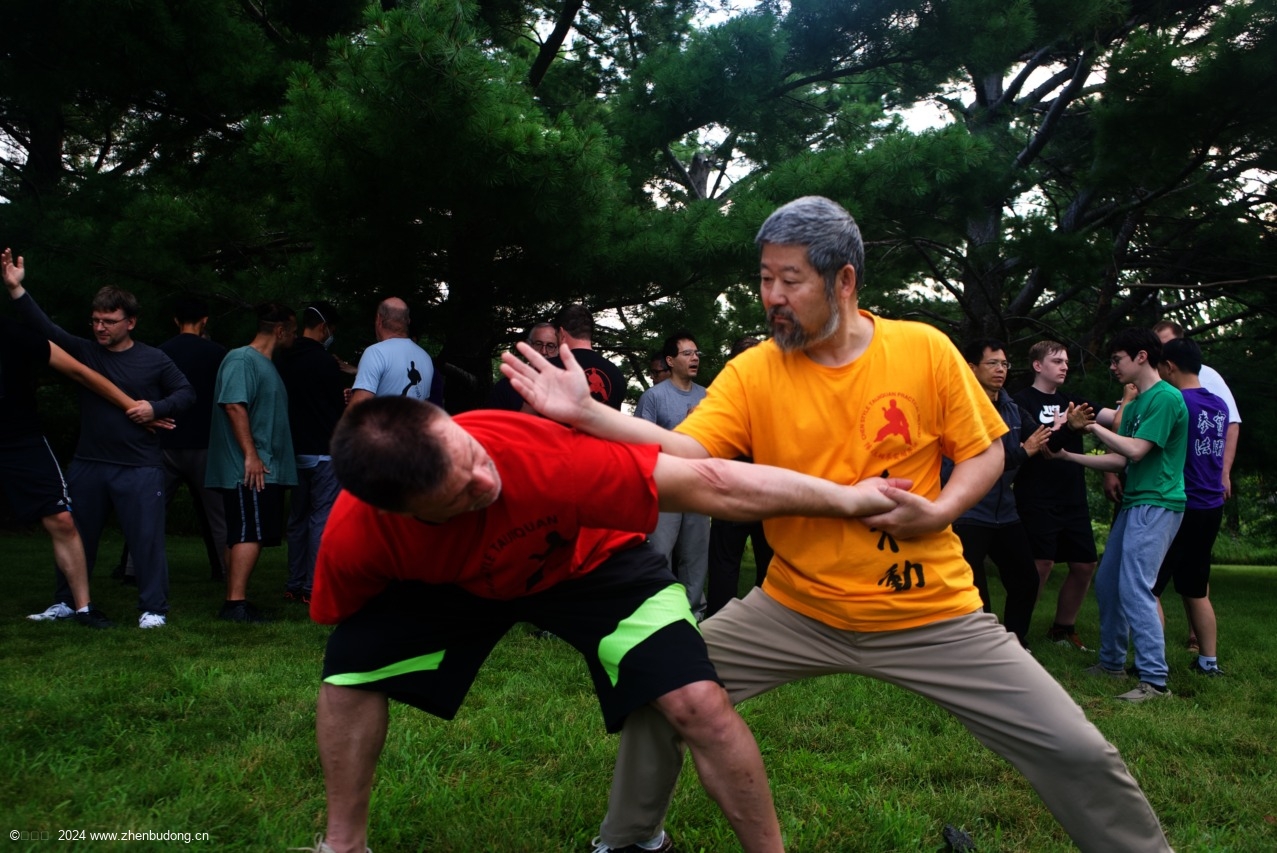 One takeaway from a morning session was about non-moving. As a beginner I have two main permanent questions. One: how should I move (and what not to move)? Two: how do I train to achieve that? This is hard, particular training for not moving. Master Chen explained during a morning how to do the latter, in particular for the second submove (the turn to the right) of the first move in the yilu. The left hand’s middle finger should stay fixed in space during the rotation, something that’s difficult when there is nothing holding it, particularly with resistance. Master Chen’s indication was to actually fix the finger against an object (we used the wooden poles lining the alley) and do the movement with the finger resting against it, then do it without contact, trying to replicate the body feeling. With and without contact, for a few months. I added this to the practice routine and realize (or so I think) it’s the same principle of training as fixing the knee against a wall with a yoga block. I had seen the articles but didn’t think of the alternation between supported and unsupported movements.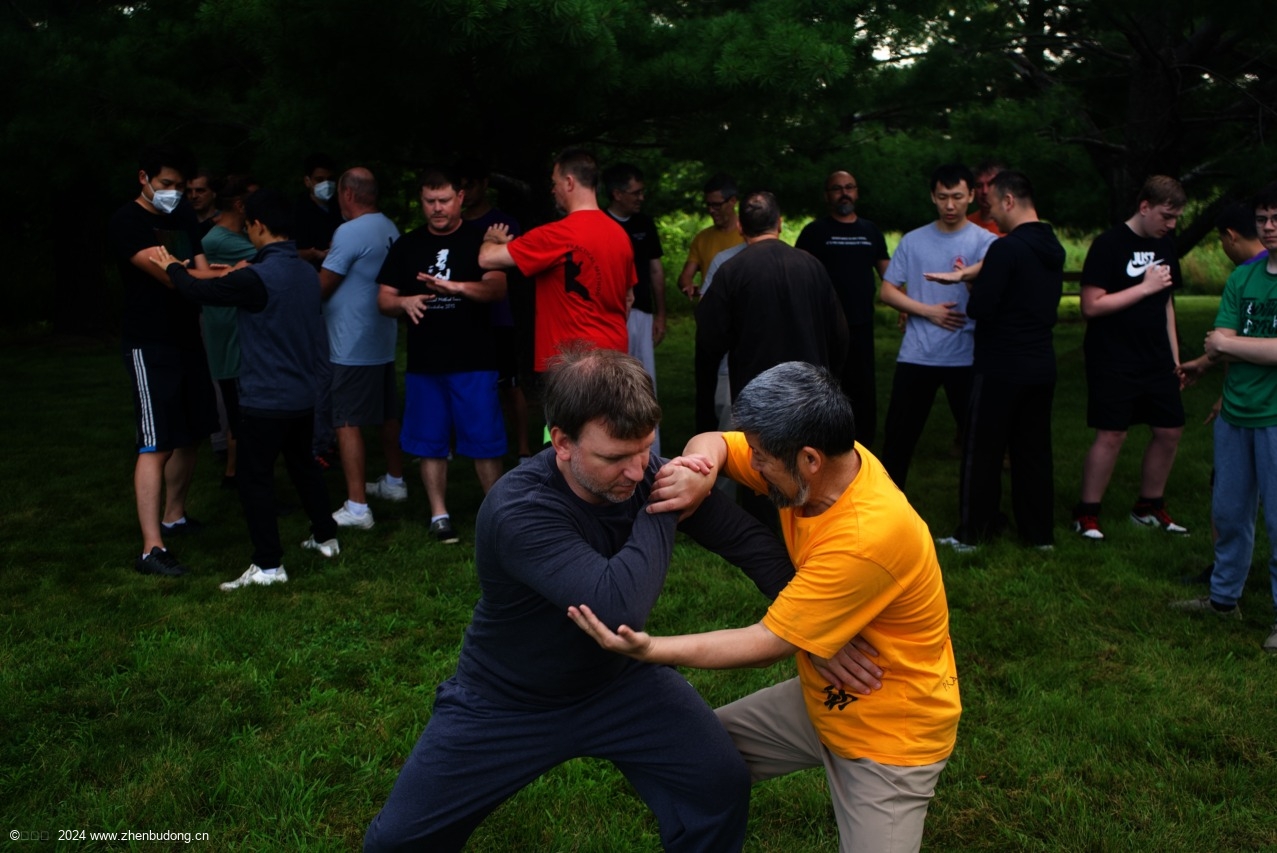
13th NA Practical Method Seminar in Iowa 20240720-晨练 – 21 Duceck
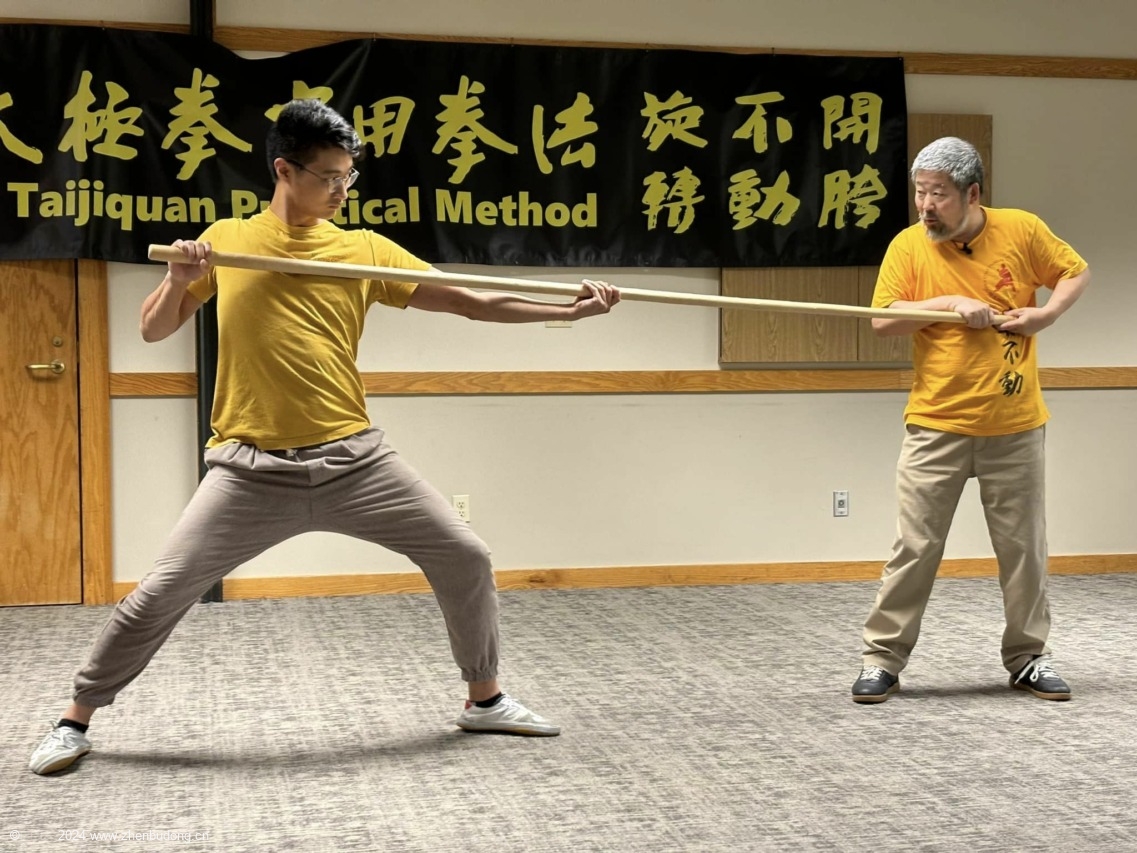
13th NA Practical Method Seminar in Iowa 20240720-25StaffToh
- a rotation is not a true rotation if the rear part of the body does not move symmetrically to the front one, relative to the pivot point. I tend to forget about the rear part because my mind is too focused on the front and the pivot point. A different way the same idea was expressed: if the opponent pushes and we follow in the move with one part of our body, it’s useless unless we push forward correspondingly with the other half.
- in push hands, be flexible without pushing and wait for the moment when the opponent’s vertical axis tilts then we push him in the same direction, to further unbalance him (it takes about 3 years to develop the sensitivity). Thus, it’s important to keep our torso vertical.
- with a staff, the back hand only fakes the push. The real push comes from the front hand. No telegraphing.
- a rotation is like a conveyor belt: “as it comes in, so it goes out” (by Chen Fake if I recall correctly although I didn’t get the exact words). One more way to express the first idea above.
- a shuffle forward is done with a pull from the front leg through the arch of legs. Do not push with the rear leg, which is a mistake I make often.
- practice yilu with power like a pressurized release
- “taiji problem: we don’t have balance, power and motion all at the same time”
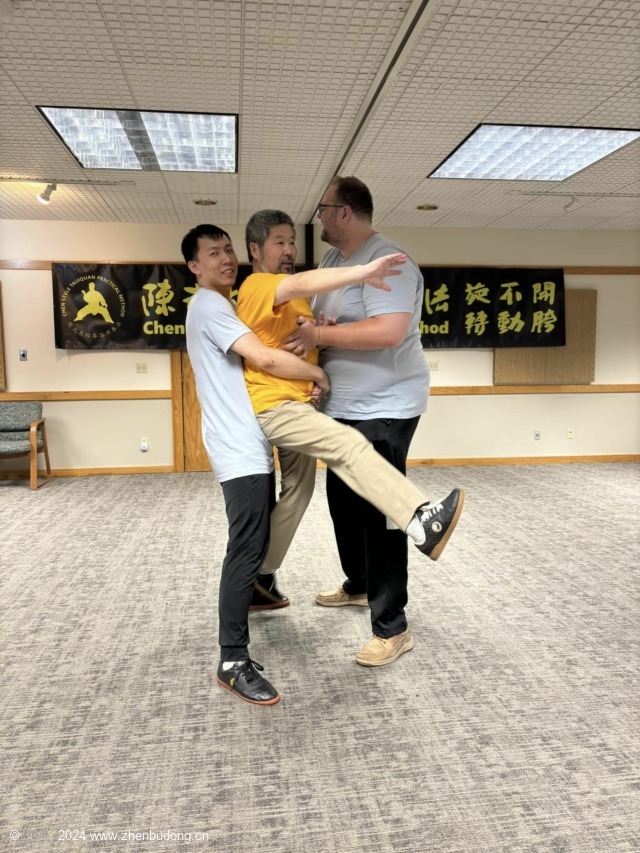
这个真要猜一猜在干什么?
13th NA Practical Method Seminar in Iowa 20240720-27Hold Center
Master Chen also taught the proper position and stretch of the neck. I didn’t realize that a “suspended head” involved that much of a stretch, so much that the platysma muscle is very visibly stretched (I learned about this muscle at this workshop).
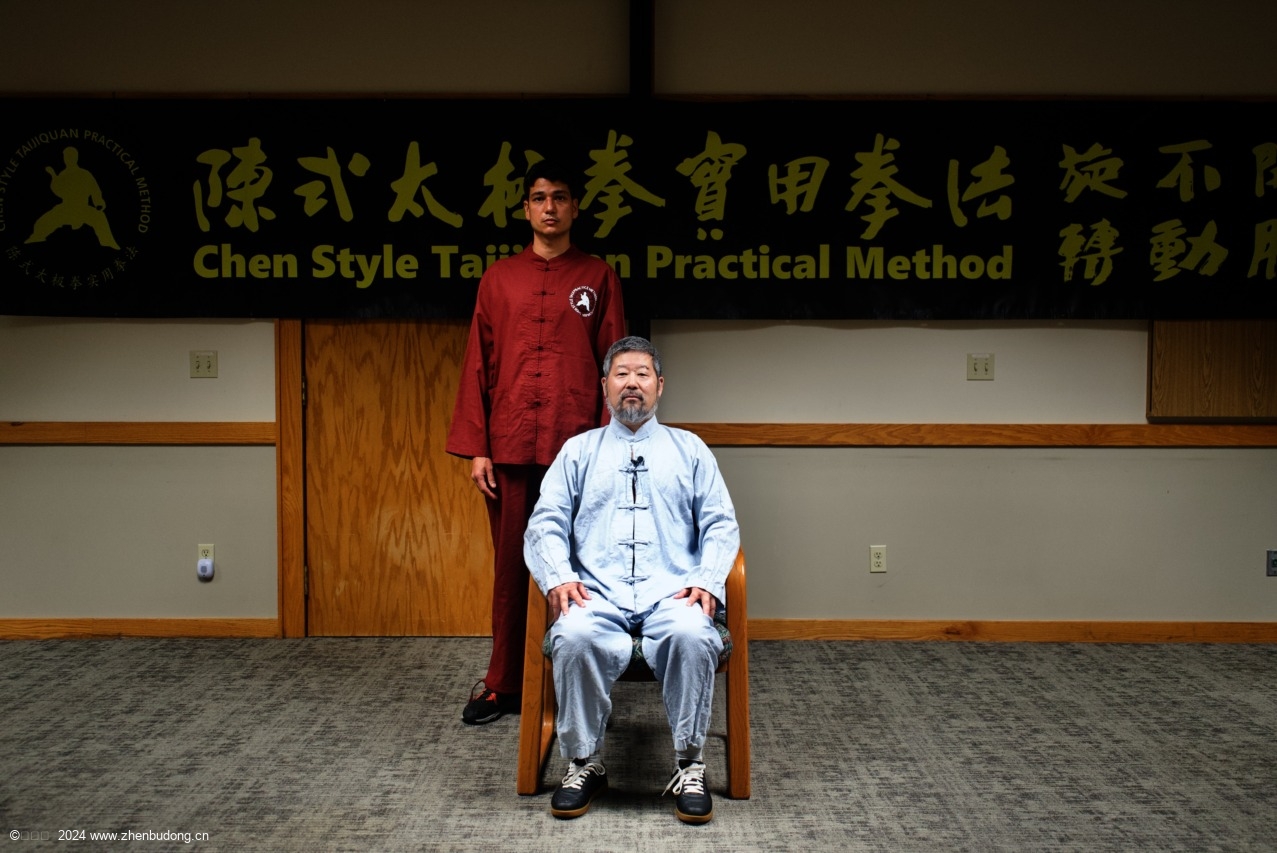
13th NA Practical Method Seminar in Iowa 20240720-41 Naub Discipleship Group – Official Portrait
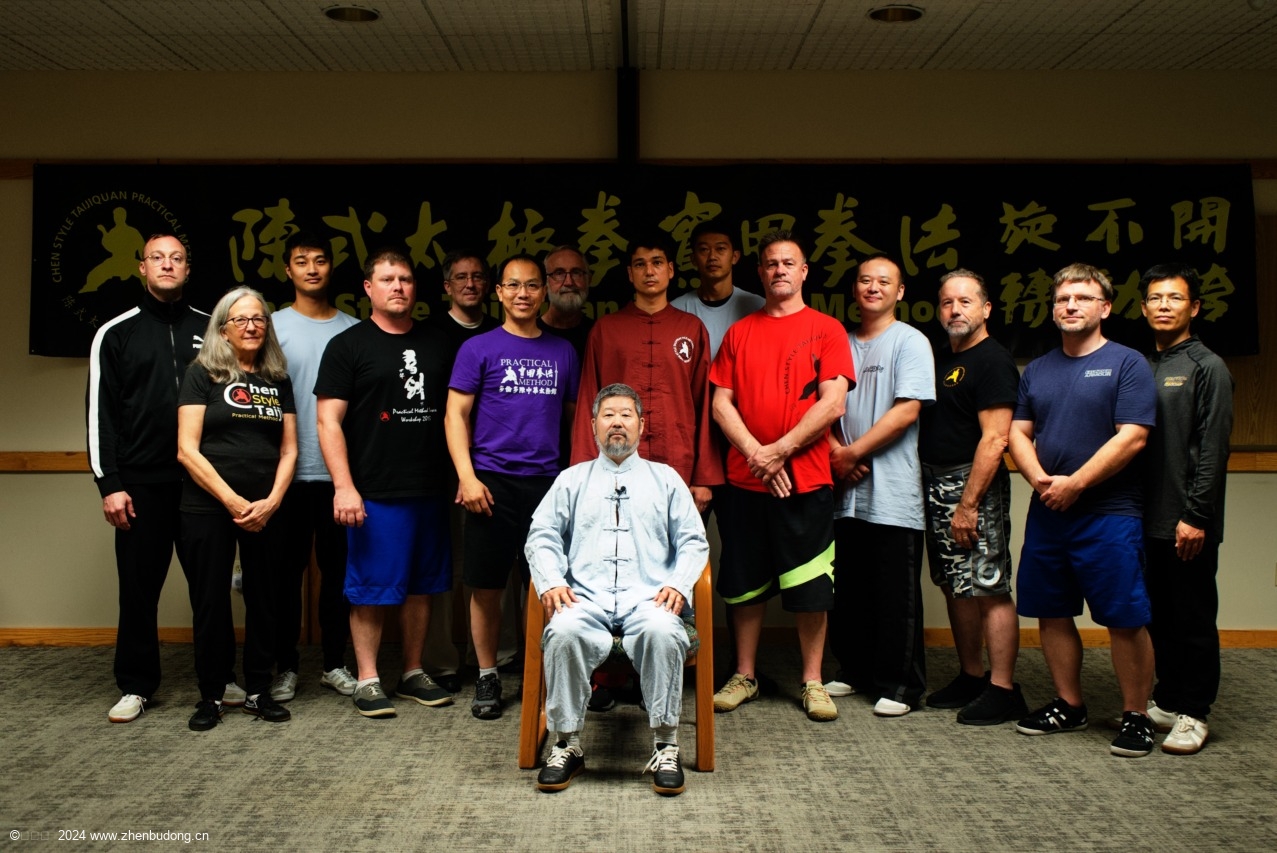
13th NA Practical Method Seminar in Iowa 20240720-41 Naub Discipleship Group – 2
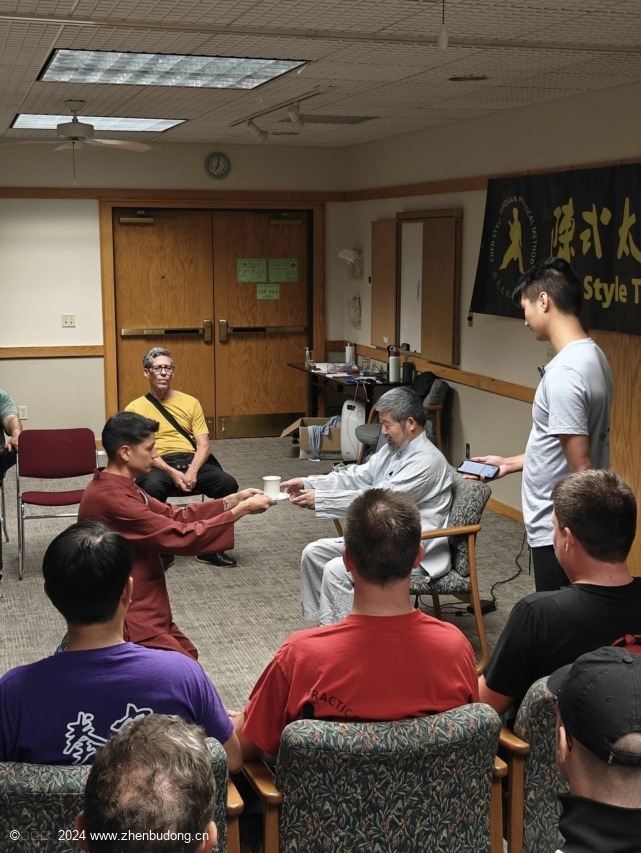
13th NA Practical Method Seminar in Iowa 20240720-41 Naub Discipleship Tea
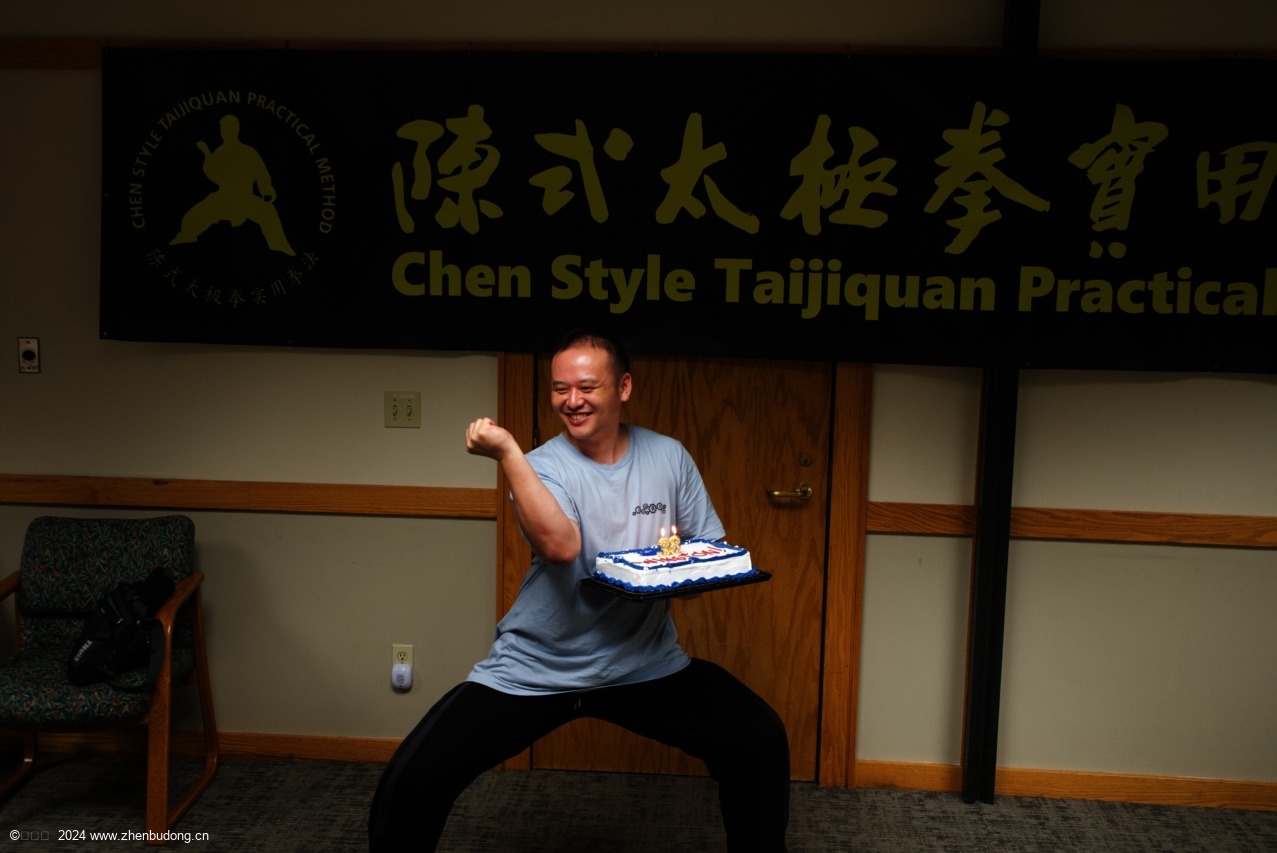
13th NA Practical Method Seminar in Iowa 20240720-晨练 – 106 王书帆生日
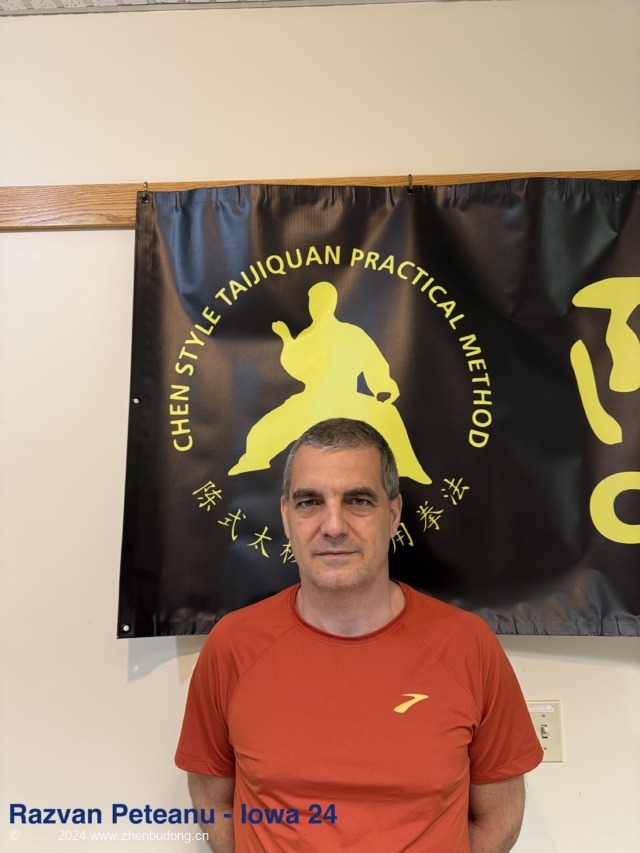
本文作者:Razvan Peteanu Portraits-13th NA Practical Method Seminar in Iowa 20240722 – 14
更多帖子
- 苦练太极三年 不如教练一点 (强烈推荐)
- 2016年实用拳法北京清华站讲座心得 (强烈推荐)
- 陈中华老师2018年一月20-21美国凤凰城实用拳法讲座个人笔记及评论 (强烈推荐)
- 第四届日照陈中华陈式太极拳实用拳法讲座 (强烈推荐)